
The Insight Does Not Survive the Return
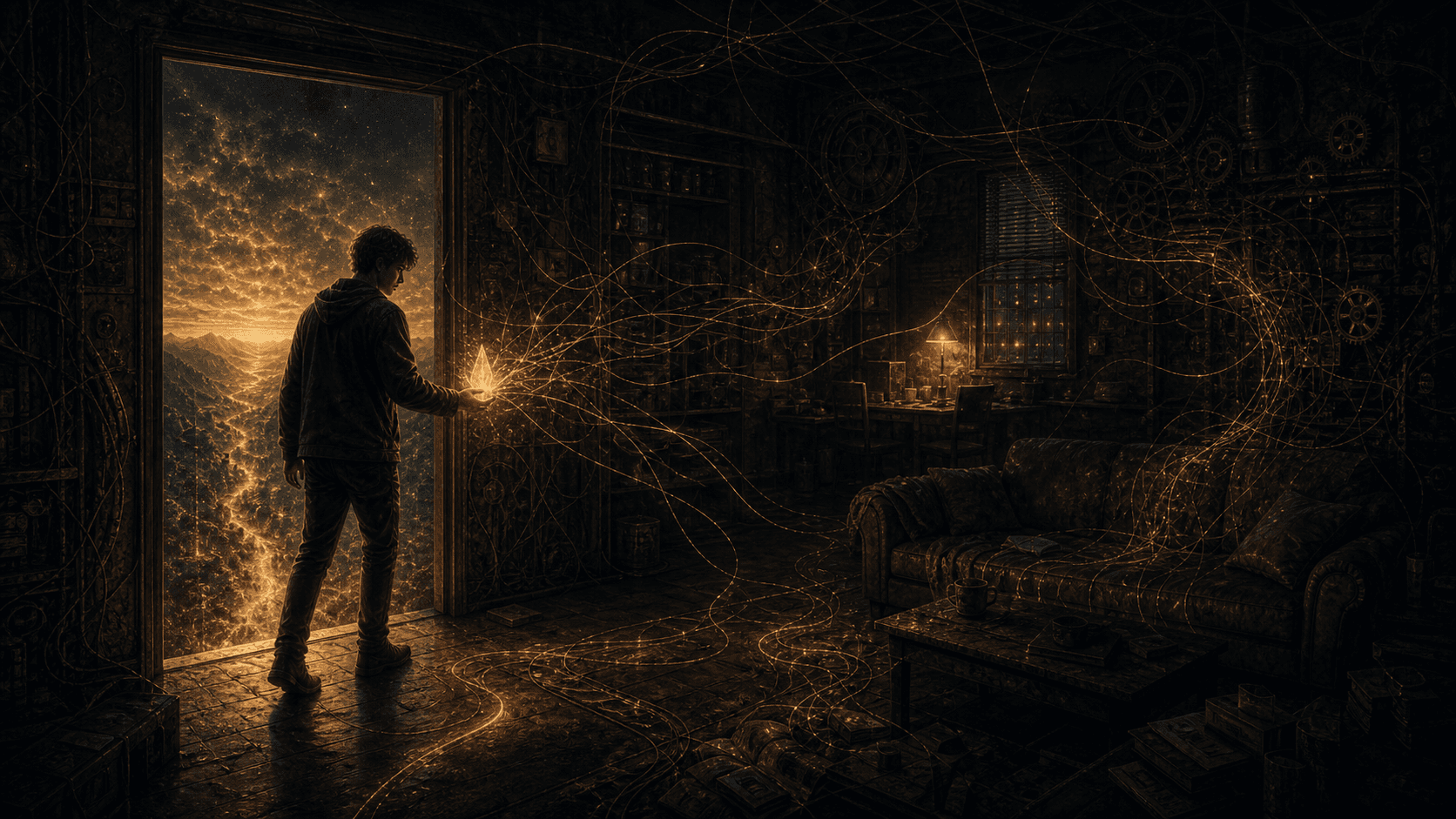
A person has a genuine breakthrough. A realization, an opening, a moment of clarity that reorganizes how they see their life. It is real. They feel changed. And then, weeks or months later, the change has quietly evaporated. The old patterns are back. They begin to doubt the experience ever meant anything. Maybe, they think, it was just a mood.
The breakthrough did not fail because it was false. It failed because it had to survive a return. The person went back to the exact environment that produced the old self, and the environment did what environments do: it restored the pattern it was built to produce.
A transformation rarely fails in the moment of insight. It fails on the return. The old environment is a restoring force, and an insight with no infrastructure cannot survive contact with the life that required it.
The opening is the easy part
Openings are not rare. People have them through crisis, loss, love, ceremony, illness, travel, sudden recognition. In the moment, the insight can be vivid and total. The person sees the pattern they have been trapped in, feels the possibility of a different way of being, and is genuinely moved. Nothing about this is fake [1].
But the opening is the easy part. It happens in a particular condition: heightened, removed from ordinary life, often outside the normal environment. The insight is generated in conditions that are not the conditions the person actually lives in. It is a peak, and peaks are, by definition, not where life is conducted [1, 2].
The hard part is not having the insight. It is carrying it back into the ordinary environment and keeping it alive there. And this is where most transformations quietly die, not at the peak, but in the descent back into normal life, where the conditions that generated the insight no longer hold and the conditions that generated the old self resume [2].
The environment is a restoring force
The old self was not produced in a vacuum. It was produced by an environment: a set of relationships, routines, spaces, pressures, and cues that together generate and maintain a particular way of being. The self is, in large part, the output of that environment running continuously [3].
When the person returns to that environment after an opening, the environment has not changed. The same relationships make the same demands. The same routines pull in the same directions. The same cues trigger the same responses. The environment is still configured to produce the old self, and so it begins, immediately and without malice, to produce it again. The old pattern returns not because the insight was weak but because the machine that generates the pattern is still running [3].
This is why the environment functions as a restoring force. Like a system pulled briefly out of equilibrium, it tends back toward its prior state once the disturbing force is removed. The insight was the disturbing force. Once it fades, the environment restores the configuration it was always set to. The person experiences this as the change wearing off, when what is actually happening is the environment reasserting itself [3, 4].
Insight without infrastructure
The reason the insight loses to the environment is that the insight usually arrives without infrastructure. It is a recognition, a feeling, a vision of a different way. What it lacks is the set of concrete supports that would let it persist: changed routines, changed relationships, changed cues, changed surroundings. Without those, the insight is a guest in a house built for someone else [2, 4].
A realization, on its own, is just a state of mind, and states of mind are not durable against an environment engineered to produce different ones. To survive, the insight has to be converted into structure: specific changes to how the days are arranged, which relationships are kept close, which patterns are interrupted, what the surroundings cue. The insight names a direction. The infrastructure is what makes the direction livable past the moment of clarity [4].
This is why telling someone to simply remember their breakthrough rarely works. Memory is not infrastructure. The person can remember the insight perfectly and still revert, because remembering does not change the environment that is restoring the old self. What changes the outcome is not holding onto the insight harder. It is rebuilding the environment so that it produces the new self rather than the old one [3, 4].
Change is environmental redesign
The consequence is that durable change is less about the depth of the insight than about the redesign of the life around it. The quality of the breakthrough matters far less than whether the environment is reconfigured to sustain what the breakthrough revealed [3, 4].
This reframes transformation. The romantic image is that a powerful enough insight changes a person. The structural reality is that an insight only changes a person if it is followed by the unglamorous work of altering the conditions that produce them: which relationships, which routines, which spaces, which recurring cues. The opening provides the direction. The redesign provides the persistence. Without the redesign, the opening is a peak followed by a return to baseline, and the baseline is set by the environment, not by the insight [4].
So the failure of so many breakthroughs to last is not evidence that they were shallow or false. It is evidence that an insight is not self-sustaining. It needs a structure to live in, and if it is returned to the old structure unchanged, the old structure will, reliably and without drama, restore the old self.
The point
An opening rarely fails in the moment it happens. The insight is usually real, generated in heightened conditions removed from ordinary life. It fails on the return, when the person goes back into the environment that produced the old self, and that environment, unchanged, begins immediately to produce the old self again.
The environment is a restoring force. The self is largely the output of a configuration of relationships, routines, and cues, and when the disturbing force of the insight fades, the configuration pulls back to its prior state. The insight loses not because it was weak but because it arrived without infrastructure: it was a recognition, not a redesign, and a recognition cannot outlast an environment engineered to generate something else.
This means durable change depends less on the depth of the insight than on the redesign of the life around it. The opening provides the direction; the reconfiguration of the environment provides the persistence. An insight returned unchanged to the conditions that required it will reliably evaporate, not because it was false, but because nothing was built for it to live in.
Sources
- James, W. (1902). The Varieties of Religious Experience. Longmans, Green. On the nature of transformative and conversion experiences, their vividness in the moment, and the question of what determines whether their effects persist or fade after the experience ends.
- Miller, W. R. & C'de Baca, J. (2001). Quantum Change: When Epiphanies and Sudden Insights Transform Ordinary Lives. Guilford Press. On sudden transformative insights and the conditions under which they produce lasting change versus reverting, emphasizing the role of subsequent life structure.
- Lewin, K. (1951). Field Theory in Social Science. Harper. On behavior as a function of the person and their environment, and on how stable behavior patterns are maintained by the surrounding field, which restores prior states unless the field itself is changed.
- Clear, J. (2018). Atomic Habits. Avery. On how durable behavior change depends on redesigning environment, cues, and routines rather than on motivation or insight alone, and how unchanged environments reliably restore prior patterns.