
Emotion Is the Engine
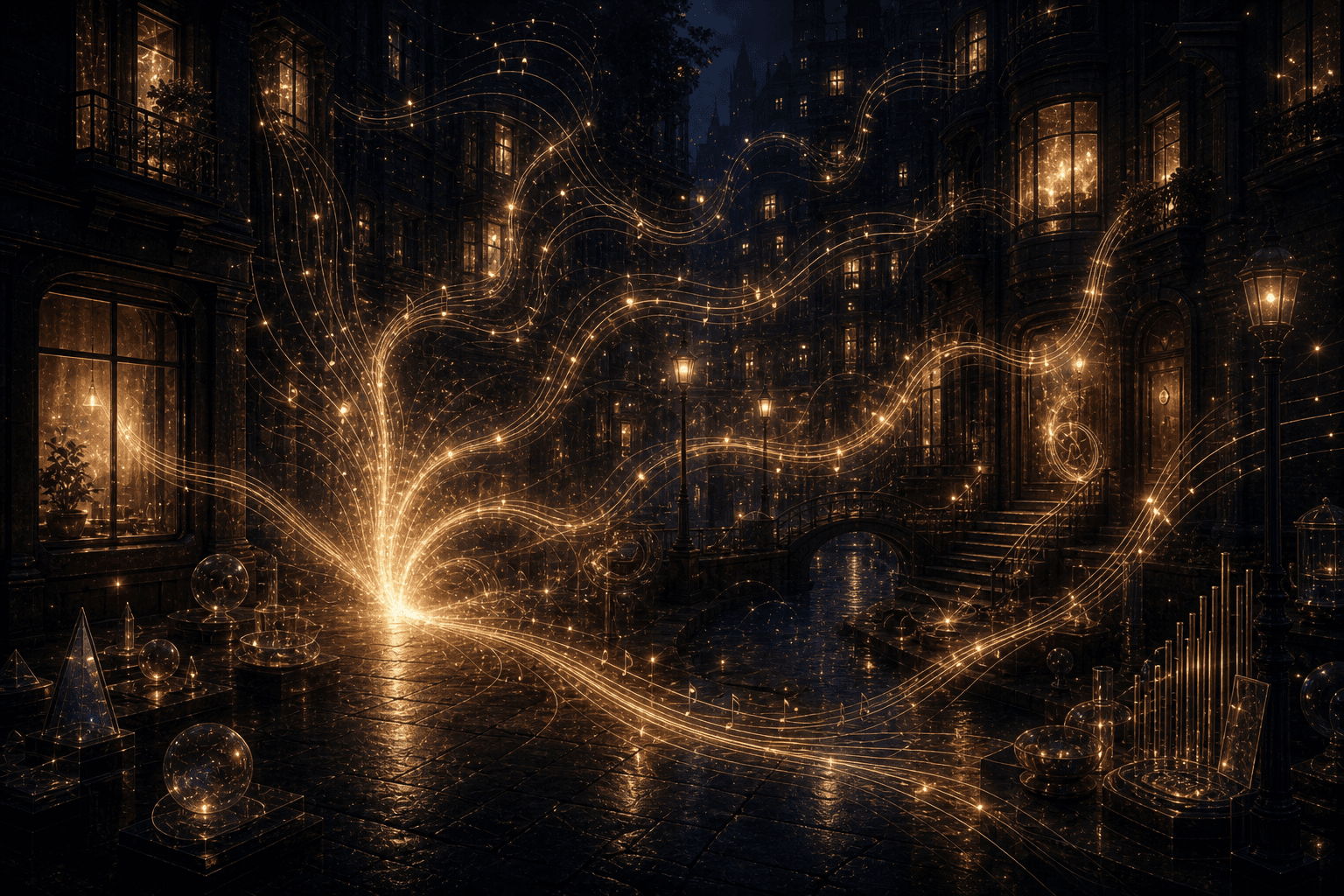
A band is playing on the street. People stop and listen. The musicians keep playing. And if you ask what is actually being accomplished, in the terms we usually use to explain behavior, the answer is nothing. No one is fed, protected, or made safer. No survival problem is solved. The listeners stopped because it pleases them. The musicians play because they like it. The entire scene exists for one reason: emotion.
This is easy to dismiss as trivial, but it points at something large. A huge portion of human life is like this street music: done not to accomplish anything instrumental but to feed, move, express, or release emotion. And if that portion is large enough, then emotion is not a decoration on top of a life organized around survival. It is one of the main engines that life is organized around.
A great deal of human behavior has no instrumental purpose. It exists to move emotion. Emotion is not a layer on top of a life aimed at survival. It is one of the primary engines the whole thing runs on.
Behavior without instrumental purpose
We tend to explain behavior instrumentally: people do things to achieve outcomes, solve problems, gain advantages, secure survival. This explanation works for a lot of behavior. But it fails completely for a large category of things people constantly do, and the failure is not a small exception. It is a whole domain of human life that instrumental explanation cannot touch [1].
Street music is a clean example. The listeners gain nothing survival-relevant by stopping. The musicians solve no practical problem by playing. Nothing is being produced, secured, or advanced. And yet the behavior is not random or meaningless; it is happening for a clear reason. The reason is simply that it moves something emotional: it pleases, it lifts, it charges the atmosphere, it makes the people involved feel alive. The purpose is affective, not instrumental [1, 2].
This category is enormous. People dance, sing, decorate, dress beautifully, tell jokes, gather in crowds, play games, make and listen to music, watch performances, and countless other things that accomplish nothing instrumental and are done because of what they do to emotion. To say these have no purpose is wrong; they have an affective purpose. To say they are marginal is also wrong; they occupy a vast share of human life. Instrumental explanation simply does not reach them, because they were never instrumental [2].
Emotion is not decoration
The usual assumption places emotion at the periphery: life is fundamentally about survival and function, and emotion is a pleasant addition, a decoration on top of the real business. On this view, the serious engine is utility, and emotion is the ornament. But the sheer volume of non-instrumental, purely affective behavior suggests this has it backwards, or at least badly incomplete [1, 3].
If people constantly do things whose only purpose is to move emotion, then emotion is not sitting at the periphery being occasionally indulged. It is at the center, actively driving an enormous amount of behavior. The street music, the dancing, the gathering, the singing are not breaks from the real business of life; for the people doing them, they are a main part of what life is for. Emotion is not the ornament on the engine. It is one of the engines [2, 3].
This reframes what a human being is. Not primarily a survival machine that occasionally enjoys things, but an emotion-processing organism that also survives. The affective machinery is not auxiliary equipment; it is core equipment, and much of behavior exists to run it: to generate emotional movement, circulate it, express it, release it, share it. A being like this does things not only to stay alive but to keep its emotional machinery in motion, and the second is not a lesser activity than the first [3].
Why the machinery needs to move
If emotion is an engine, then it needs to run, and this explains something about what happens when it does not. A person who only survives, who meets their functional needs but has no emotional movement, does not feel neutral. They feel deadened. Something essential goes missing when the affective machinery stops circulating, which would make no sense if emotion were mere decoration [3].
This is why cultures everywhere build endless structures whose function is emotional circulation: music, festivals, rituals, dances, gatherings, performances, celebrations, mournings. These are not luxuries a society adds once survival is handled. They are how a culture keeps the inner machinery of its people moving, and they appear in every human society, including ones with barely enough to survive, because the emotional engine needs to run regardless of material conditions. The universality of these structures is evidence that they meet a core need, not a peripheral want [2, 3].
So street music is not extra. It is one of the ways the emotional engine gets fed in the middle of ordinary life. The people who stop to listen and the people who play are keeping something essential in motion, something that a purely survival-oriented account cannot even see, because that account has no place for a need whose object is emotion itself. The band on the street is running the engine, for themselves and for everyone who stops [3].
The point
We usually explain behavior instrumentally, as aimed at outcomes and survival, but a huge category of human behavior has no instrumental purpose at all. Street music, dancing, singing, gathering, decorating, playing: these accomplish nothing functional and are done entirely for what they do to emotion. They are not purposeless; they have an affective purpose, and they occupy a vast share of human life that instrumental explanation cannot reach.
This means emotion is not a decoration on top of a life organized around survival. If people constantly do things whose only purpose is to move emotion, then emotion is at the center, driving an enormous amount of behavior. The human being is not primarily a survival machine that occasionally enjoys things; it is an emotion-processing organism that also survives, and much of what it does exists to run its affective machinery.
That machinery needs to move, which is why a person who only survives, without emotional circulation, feels deadened, and why every culture builds structures, music, festival, ritual, whose function is to keep the inner machinery of its people in motion. Street music is one of those structures, running in the middle of an ordinary day. It is not extra. It is the engine being fed. Not everything is for something. A great deal of life is for emotion, and emotion is one of the main things life runs on.
Sources
- Damasio, A. (1994). Descartes' Error: Emotion, Reason, and the Human Brain. Putnam. On how emotion is not a peripheral or opposing force to reason and function, but a central, driving component of human cognition and behavior.
- Dissanayake, E. (1992). Homo Aestheticus: Where Art Comes From and Why. Free Press. On how art, music, and emotionally charged making and gathering are core, universal human behaviors serving affective needs rather than peripheral luxuries added after survival.
- Fredrickson, B. L. (2001). "The role of positive emotions in positive psychology: The broaden-and-build theory of positive emotions." American Psychologist, 56(3): 218-226. On the central functional role of emotion in human flourishing, and how the generation and circulation of emotion is core to well-being rather than incidental to it.