
The Open Loop
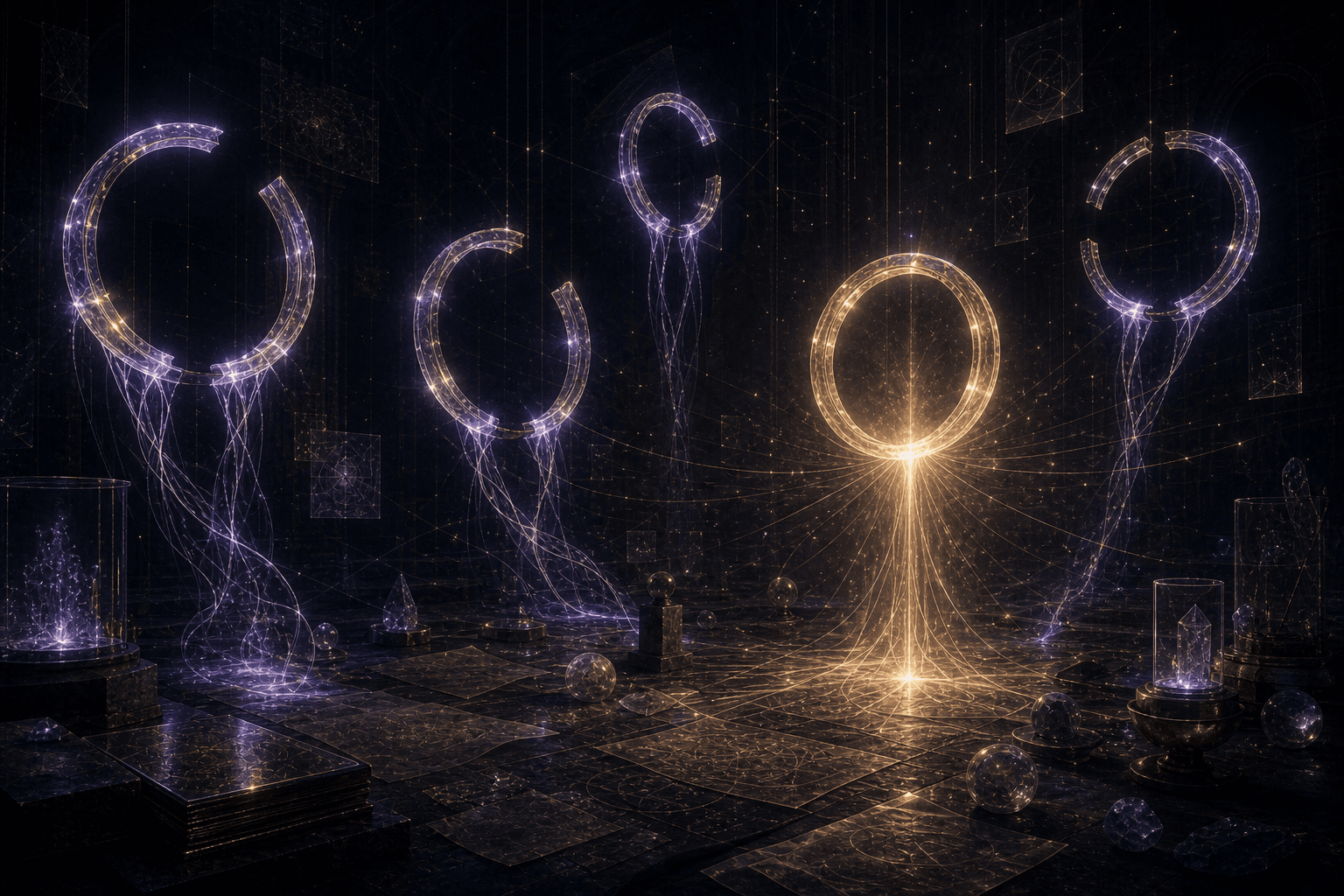
There is a difference between a situation that turned out badly and a situation that has not turned out at all. The bad outcome hurts, sharply, and then begins to fade. The unresolved one does something else: it stays. It keeps pulling at your attention, keeps generating analysis and anticipation, keeps drawing energy long after a clear bad outcome would have released you. The open situation is, in a strange way, worse than the closed painful one.
This points at a distinction we usually miss. A bad outcome hurts. An unresolved outcome consumes. And these are different costs. The pain of a bad outcome is acute and finite; the drain of an open loop is low-grade and continuous, and it persists precisely because the loop has not closed.
A bad outcome hurts and then fades. An unresolved outcome consumes, continuously, because it is still open. Closure, even unhappy closure, releases the energy the open loop was draining. The cost was never the bad news. It was the not-knowing.
Open and closed situations
A situation can be open or closed, and the two impose different kinds of cost. A closed situation has resolved: the outcome is known, the possibility has collapsed into a fact, and whatever it was, good or bad, it is now settled. An open situation has not resolved: the outcome is still undetermined, the possibility is still live, and the mind is still holding it as something that could go various ways [1].
These impose costs through different mechanisms. A closed bad situation imposes the cost of the bad outcome: it hurts, and the hurt is a definite quantity that can be felt, absorbed, and gradually metabolized. An open situation imposes the cost of maintenance: the mind must keep the possibility alive, keep tracking it, keep allocating attention and emotional energy to something that has not yet become a fact. This is a continuous cost, paid for as long as the loop stays open [1, 2].
So the two costs have different shapes. The bad-outcome cost is a spike that decays: sharp, then fading. The open-loop cost is a plateau that persists: low, but continuous, and unending until the loop closes. Over time, the persistent low cost of an open loop can exceed the spiking cost of a resolved bad outcome, because the spike fades and the plateau does not. This is why unresolved situations can feel worse than resolved painful ones [2].
Why the open loop consumes
The open loop consumes because the mind cannot let go of an unresolved possibility. An unclosed situation stays active in attention, continuing to generate thought, prediction, and emotional processing, because the mind treats unresolved matters as requiring ongoing tracking. As long as the outcome is undetermined, the mind keeps the loop running, and the running is the cost [1, 2].
This is not a failure of discipline; it is how attention handles the unresolved. Undetermined situations are held open precisely so they can be responded to when they resolve, which means they cannot be set down while they remain open. So the mind keeps returning to the open loop, re-analyzing, re-anticipating, re-feeling, and each return spends energy. The loop consumes not through one large expenditure but through endless small ones, the recurring cost of keeping an unresolved thing available for a resolution that has not come [2].
This is why an open loop drains more than its importance would seem to justify. Even a minor unresolved matter keeps drawing small amounts of energy simply by staying open, and many small open loops together can consume an enormous amount, quietly, in the background. The drain is proportional not to how much the outcome matters but to how many loops are open and how long they stay that way. A life full of open loops is exhausted by them without any single one being a large burden [1, 2].
Why closure releases energy
The corollary is that closure releases the energy the open loop was consuming, and this is why resolution, even unhappy resolution, is followed by a surge of available energy. When a loop closes, the mind can finally stop maintaining it. The continuous cost of keeping the possibility alive ends, and the energy that cost was consuming is freed [1, 2].
Crucially, this release happens regardless of whether the outcome was good. A bad outcome closes the loop just as effectively as a good one. Once the situation resolves, even resolves badly, the mind can set it down: there is now a fact to absorb rather than a possibility to maintain, and absorbing a fact is a finite task while maintaining a possibility is an endless one. So even an unwelcome resolution brings relief, because the specific thing it ends, the draining maintenance of the open loop, is ended by any resolution at all [2].
This explains the strange energy that follows the close of a long-running uncertainty, even when the resolution is not what was hoped for. People often report feeling freed, re-energized, able to move, after a situation finally resolves against them, and it can be puzzling that a bad outcome produces relief. But the relief is not about the outcome; it is about the closure. The bad news is one cost, absorbed and fading; the not-knowing was another cost, continuous and now ended. Ending the continuous cost releases energy even as the bad news is absorbed [1, 2].
The gathering and the closing
The practical consequence concerns balance between two capacities: the capacity to open loops and the capacity to close them. Opening loops means entertaining possibilities, exploring options, keeping things live. Closing loops means resolving them, deciding, letting possibilities collapse into facts. A functioning life needs both, but they must be balanced, because the open loops one creates must eventually be closed [1, 2].
The failure mode is when the gathering mechanism outruns the closing mechanism, when loops are opened faster than they are closed. Then open loops accumulate, and since each one imposes a continuous maintenance cost, an accumulation of them imposes a large and constant drain. The result is a life filled with unresolved situations, each quietly consuming energy, adding up to a persistent exhaustion that has no single visible source. The problem is not any one loop but the backlog of them, all open at once [2].
So the corrective is not only to avoid bad outcomes but to close loops, actively, including by accepting resolutions that are not ideal. Since closure releases energy regardless of outcome, deliberately resolving open situations, even settling them unfavorably, frees the energy their openness was consuming. Much of the fatigue of a complicated life is the maintenance cost of too many open loops, and much of its available energy is recovered simply by closing them. The relief people seek is often not a better outcome but an end to the not-knowing.
The point
Situations impose different costs depending on whether they are open or closed. A closed bad outcome imposes the cost of the bad news: a sharp hurt that fades. An open situation imposes the cost of maintenance: the continuous energy of keeping an unresolved possibility alive in attention. The first cost is a spike that decays; the second is a plateau that persists until the loop closes, which is why unresolved situations can feel worse than resolved painful ones.
The open loop consumes because the mind cannot set down an undetermined situation; it keeps tracking, analyzing, and anticipating, spending energy in endless small increments. This drain is proportional not to how much the outcome matters but to how many loops are open and how long they stay open, so a life full of small open loops is quietly exhausted by them.
Closure releases the energy the loop was consuming, and this happens regardless of the outcome, because a bad resolution ends the maintenance cost just as well as a good one. This is why even an unwelcome resolution brings a surge of relief: the not-knowing was a separate, continuous cost, and any resolution ends it. So the discipline is not only to avoid bad outcomes but to close loops, since much of the fatigue of a complex life is the maintenance of too many open ones, and much of its energy is recovered simply by letting them resolve.
Sources
- Zeigarnik, B. (1927). "Das Behalten erledigter und unerledigter Handlungen." Psychologische Forschung, 9: 1-85. The Zeigarnik effect: uncompleted tasks and unresolved situations persist in memory and attention, continuing to occupy cognitive resources until they are completed or closed.
- Masicampo, E. J. & Baumeister, R. F. (2011). "Consider it done! Plan making can eliminate the cognitive effects of unfulfilled goals." Journal of Personality and Social Psychology, 101(4): 667-683. On how unresolved goals continuously consume attention and cognitive resources, and how closure or a plan for resolution releases those resources.